
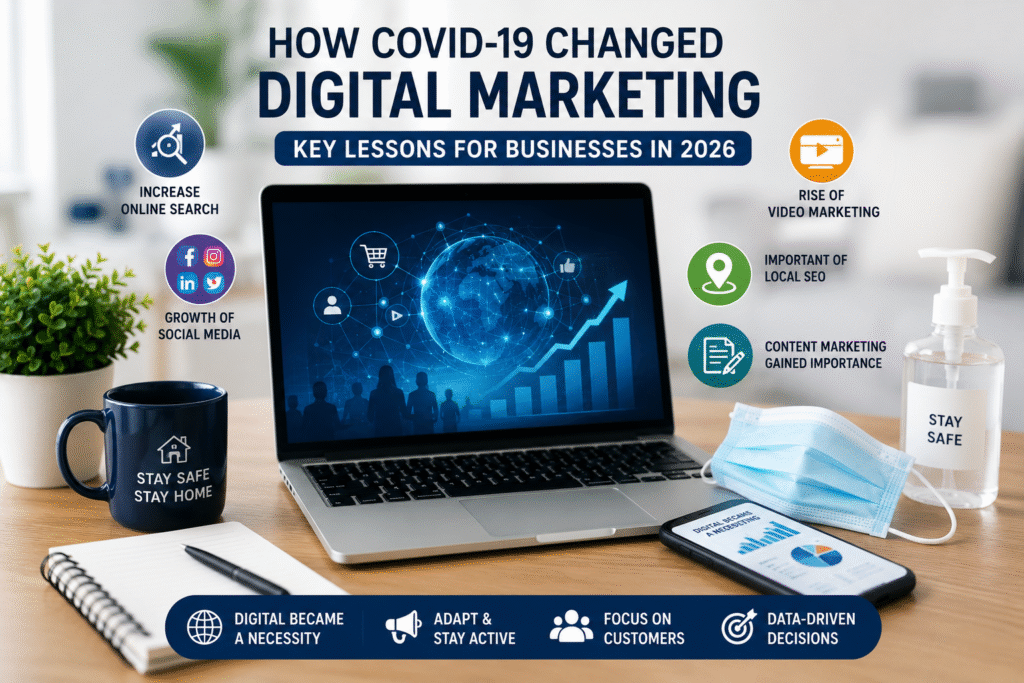
Impact of COVID-19 on Digital Marketing: Key Lessons for Businesses in 2026
Introduction
The COVID-19 pandemic transformed the way businesses operate and interact with customers. While many industries faced unprecedented challenges, digital marketing emerged as one of the fastest-growing and most essential business functions.
The pandemic accelerated digital transformation, encouraging businesses to strengthen their online presence, invest in digital advertising, embrace e-commerce, and connect with customers through digital channels. Today, these changes continue to shape marketing strategies across every industry.
In this article, we’ll explore Impact of COVID-19 on Digital Marketing, what businesses learned, and why digital marketing remains essential for long-term success.
How COVID-19 Changed Consumer Behavior
One of the biggest impacts of the pandemic was the shift in consumer behavior.
Customers began searching online before making purchasing decisions, relying on digital platforms for shopping, learning, entertainment, healthcare, and business services.
Businesses quickly adapted by investing in:
- Professional websites
- Search Engine Optimization (SEO)
- Google Business Profile
- Social Media Marketing
- E-commerce stores
- Online customer support
This digital-first mindset continues today.
Digital Marketing Became a Business Necessity
Before COVID-19, many businesses relied heavily on offline marketing.
The pandemic highlighted the importance of having a strong online presence.
Companies that already invested in digital marketing were able to:
- Reach customers online
- Generate leads remotely
- Sell products through e-commerce
- Continue marketing despite restrictions
Businesses without a digital presence struggled to compete.
Key Changes in Digital Marketing
1. Increased Online Search
People increasingly searched Google for products, services, healthcare information, education, and local businesses.
This made SEO more important than ever.
Businesses that ranked higher on Google gained more traffic, leads, and sales.
2. Growth of Social Media
Social media usage increased significantly as people spent more time online.
Platforms like:
- YouTube
- X (Twitter)
became essential marketing channels for customer engagement, brand awareness, and lead generation.
3. Rise of Video Marketing
Video content became one of the most effective ways to educate customers.
Businesses started creating:
- Educational videos
- Product demonstrations
- Live sessions
- Webinars
- Customer testimonials
- Short-form videos
Today, video marketing remains one of the highest-performing digital marketing strategies.
4. Increased Importance of Local SEO
Customers searched for nearby businesses more frequently.
Optimizing Google Business Profile, collecting customer reviews, and maintaining accurate business information became essential for local businesses.
5. Content Marketing Gained Importance
Businesses realized that informative blogs, guides, FAQs, and educational content helped build trust.
High-quality content also improved SEO rankings and attracted potential customers organically.
Lessons Businesses Learned
The pandemic taught businesses several valuable lessons:
- Build a strong online presence.
- Invest in SEO for long-term visibility.
- Stay active on social media.
- Focus on valuable, customer-centric content.
- Use data to improve marketing decisions.
- Diversify marketing channels instead of relying on one platform.
Tips for Digital Marketing Professionals
Whether you’re a freelancer, agency owner, or marketer:
- Keep learning new digital marketing trends.
- Stay updated with Google’s algorithm changes.
- Improve SEO and content marketing skills.
- Build expertise in AI-powered marketing tools.
- Create high-quality videos and engaging content.
- Focus on delivering measurable business results.
Continuous learning is the key to long-term success.
Why Digital Marketing Matters More Than Ever
The digital landscape continues to evolve, but one thing remains constant—customers are spending more time online than ever before.
Businesses that invest in SEO, social media marketing, paid advertising, content marketing, and website optimization are better positioned to attract customers, generate leads, and grow sustainably.
Digital marketing is no longer optional; it is a core part of every successful business strategy.
Conclusion
COVID-19 accelerated the world’s shift toward digital transformation. While the pandemic created many challenges, it also showed businesses the importance of adapting to changing customer behavior.
Today, companies that embrace digital marketing are better equipped to reach new customers, build trust, and remain competitive in an increasingly digital world.
Whether you’re a business owner, student, or marketing professional, investing in digital marketing skills will help you stay ahead in the modern marketplace.